
Low-Energy Neurofeedback (LENS) & Brain Mapping
LENS - WHAT IS IT?
Low Energy Neurofeedback (LENS) is a gentle, non-invasive approach that cues the brain and central nervous system to move out of inefficient, “stuck” patterns and toward more balanced, efficient functioning. By targeting the core of neurological processing—not forcing it—LENS supports the brain’s natural self-correction, allowing regulation, clarity, and performance to improve.
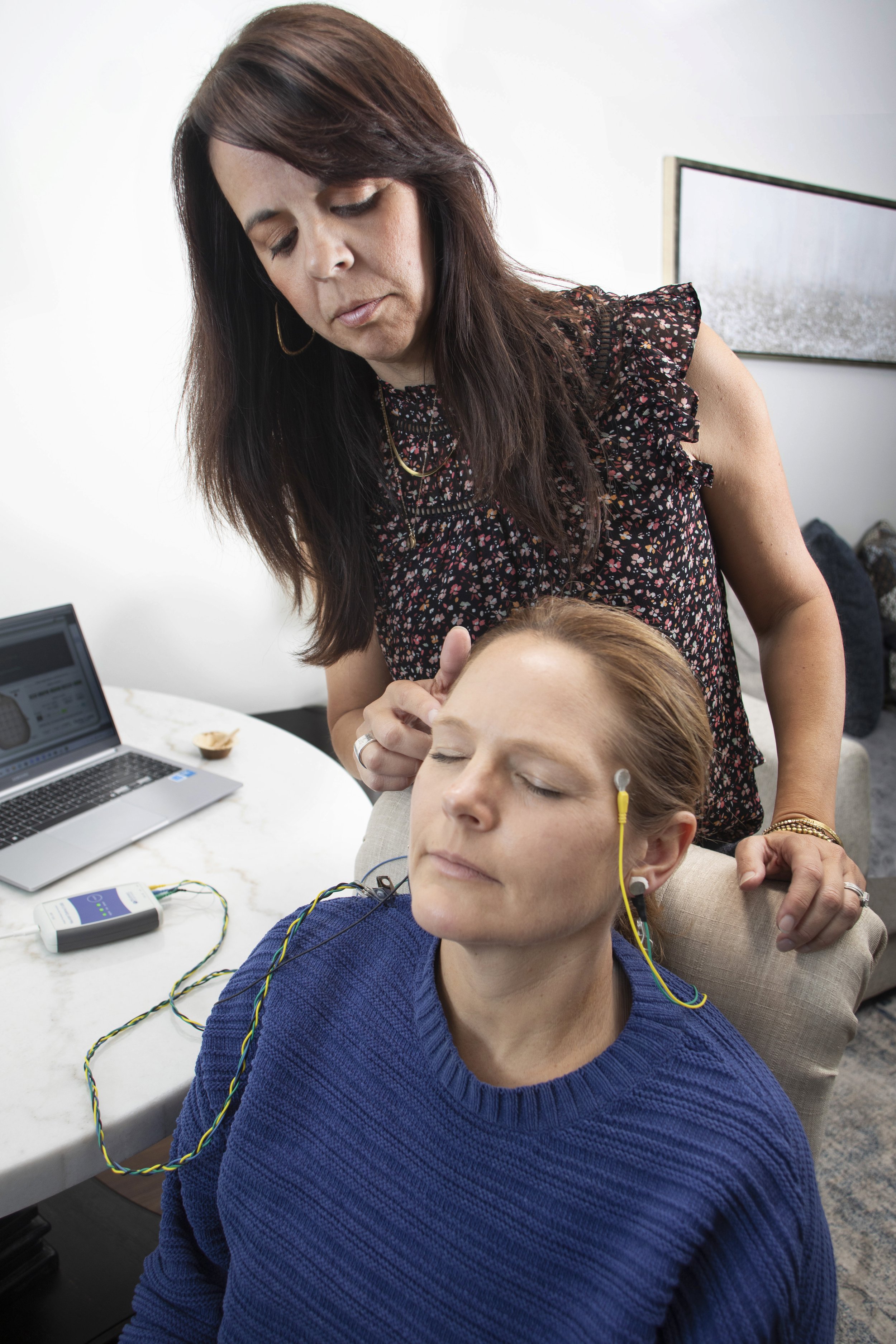
During a session, small scalp sensors read your brain’s real-time electrical activity (EEG). Software identifies moment-to-moment dominant frequencies and returns an ultra-low-energy feedback signal through the same sensors. These brief cues help the brain and nervous system reorganize activity into more optimal pathways—supporting regulation, balance, and efficiency without effort from you. Sessions are brief (often under 20 minutes) and require no talking; many people notice improvements in sleep, focus, and mood regulation within the first few visits.
What it supports:
LENS aims to enhance neuroplasticity and nervous-system equilibrium. As the brain operates more efficiently, people often report clearer thinking, calmer moods, better sleep, and more consistent performance.
Regulatory notes:
The VA recognizes LENS neurofeedback as one of four neurofeedback modalities available to veterans. While LENS neurofeedback equipment is currently FDA-registered for relaxation/self-regulation (including sleep), decades of research and client feedback suggest it is also helping with much broader concerns, such as: anxiety, depression, PTSI (post-traumatic stress injury), Traumatic brain injury (TBI) insomnia/sleep difficulties, attention/focus, and emotional regulation - while supporting many people in achieving peak physical and brain performance.
HOW LENS IS DIFFERENT FROM TRADITIONAL NEUROFEEDBACK
Unlike traditional neurofeedback, which is typically retraining the brain through operant conditioning (training with audio/visual tasks), LENS neurofeedback delivers ultra-low-frequency cues that disrupt stuck patterns and promote self-regulation by improving communication channels within the brain and central nervous system. Change isn’t forced—progress happens organically, often faster, and covering a wider range of symptoms. Clients often describe the effect as a painless “reboot” — less noise, more ease.
LENS SESSIONS vs. TRADITIONAL NEUROFEEDBACK:
Faster results: Noticeable change often occurs within ~3 sessions; many see significant gains by ~5.
Fewer visits overall: Typical protocol average ~12 sessions (vs. 30–60 for traditional).
Shorter sessions: Sessions are <20 minutes (vs. 45–60 minutes).
Once weekly cadence: Usually scheduled weekly (vs. 2–3x/week).
Passive experience: No talking, focusing, or “performing”; no screens or tasks required.
Calm, effortless feel: Generally relaxing and well-tolerated, without the fatigue that task-based sessions can create.
Broader impact: Because it isn’t training for a single task, benefits often span multiple symptoms.
HOW LENS WORKS
(the science, in plain language)
Read: Small sensors on the scalp pick up your (EEG) (brainwaves).
Identify: The software recognizes your moment-to-moment dominant frequency and other features (e.g., amplitude and flexibility at each site).
Nudge: Through those same sensors, the system returns a brief, ultra-low feedback signal—a tiny cue that helps the brain re-set inefficient patterns.
Integrate: Your brain does the rest, using its own regulatory capacity to settle, focus, and recover more efficiently.
WHY CHOOSE LENS (and why we offer it)
Fewer Sessions. Faster Improvements. Broader Results.
LENS neurofeedback is one of the least invasive and most efficient neurological interventions available, addressing multiple concerns simultaneously. At Regenesis Neuro, we’re committed to data-informed, research-backed, and individualized care. We know it works and is safe because it’s one of four types of neurofeedback approved by the VA for Veterans.
We chose LENS because we know people want faster and broader results. And for many people, the gentle, brief format makes it easier to both get started and stay on track with their protocol.